
What Questions Should I Ask Before Hiring a Painter?

Every painter who walks through your door will tell you they’re the best. I’ve been running Grade A Painters in Lower Mainland Vancouver for nearly 20 years, and I can tell you the sales pitch won’t separate a good painter from a bad one. The estimate will,
Below are the questions I’d ask if I were hiring a painter for my own home, along with what the answers should look like.
Why Everyone Sounds Like the Best Painter
A while back, I did an estimate for a homeowner who wanted thewhole interior of her house painted. She was detailed, she asked good questions, and it was obvious she cared about getting a quality job. In the end, she went with another painter who was cheaper and promised to finish faster.
About a month later, she emailed me. The house was painted, and it wasn’t good. She sent photos of drywall patches showing right through the paint, cut lines that wandered, and spots that were missed or only got one coat. The painter had already been back twice for touch-ups, and it still wasn’t right. She asked if I could come fix it.
I had to say no. I don’t take on jobs fixing other painters’ work, because it usually costs close to twice as much as doing it right the first time.
The hard part is that there wasn’t much she could have done differently in the moment. During estimates, everyone sounds confident. The difference shows up on paper, if you know what to look for.
5 Questions to Ask Before Hiring a Painter
1. What exactly does your estimate include?
This is the most important question you can ask. A good estimate tells you in detail what the painter is doing, what they’re not doing, and how they’re doing the items and areas they are. Nothing should be left to the imagination. Your expectations and the quality they promise to deliver should be clear as day. Little things that aren’t important at the beginning of the job will be important once everything is done. An experienced painter strives for perfection on every project, but perfect is subjective. A detailed estimate is how you make sure you and your painter agree on what “done right” looks like before the work begins.
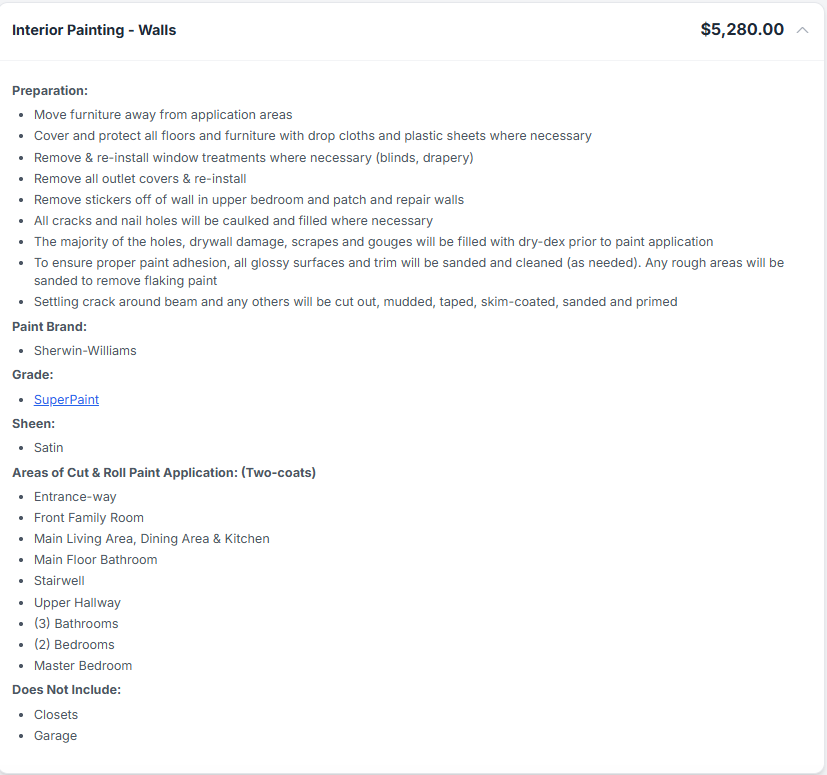
Here’s what goes into every Grade A estimate:
- The exact products, with links, so you know what’s going on your walls
- The full prep phase, including covering and protection, patching, repairs, and caulking
- The number of coats on each surface
- Itemized pricing, so you can see what each part of the job costs and adjust the scope to fit your budget
- Clear expectations about what is and isn’t possible, such as how closely we can match an existing colour, so there are no surprises at the end
Now compare that to a lot of cheaper estimates: a couple of lines of minor detail, then one overall price. You’re left guessing what’s included, and where the costs are. Sometimes that vagueness is just laziness. Sometimes it’s intentional, because a vague estimate leaves room to charge you more later on.
When you’re comparing quotes, put them side by side and ask yourself: if this painter skipped a step, would this estimate show it?
2. What prep is included, and how will you protect my home?
Lets be honest, the painting is the fun part. The real work, and the real difference between good and bad painters, is mostly in the prep.
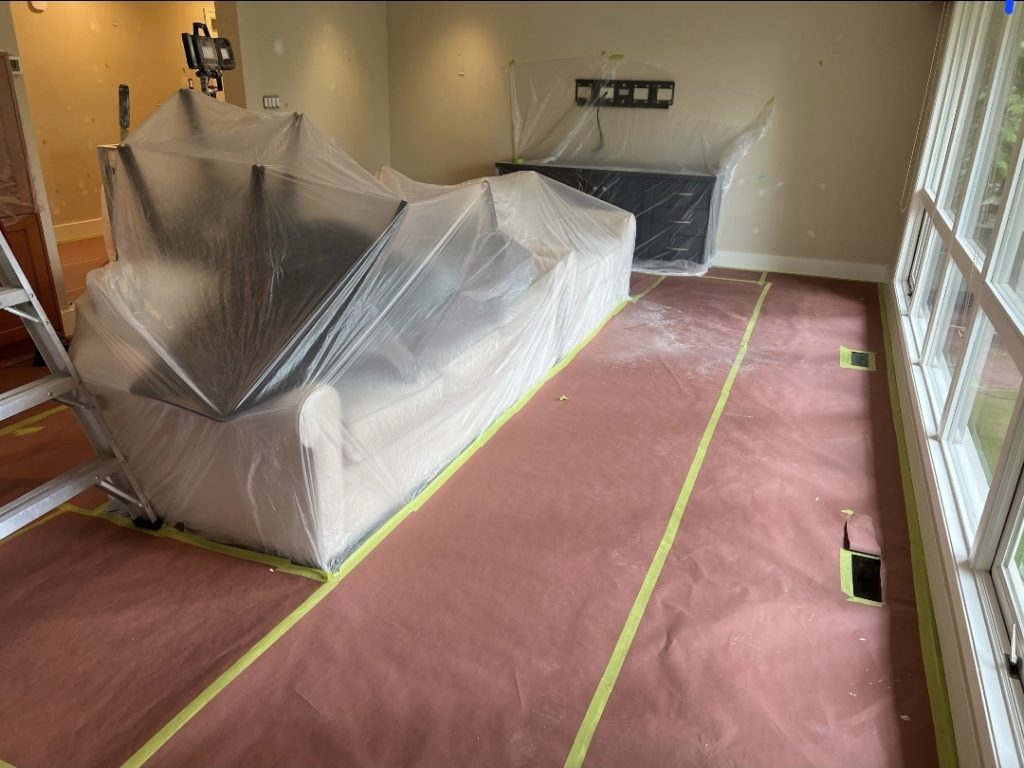
Start with protection. Paint drips and splatter are the obvious risk, but dust is the one people forget. Sanding patches creates fine dust that gets into everything. On our jobs, essentially everything in the entire home that isn’t being painted is removed or covered and furniture, appliances, countertops and lights are wrapped in plastic.
That takes about half of the first day. It isn’t glamorous, and a painter in a hurry will skip it. But the choice is simple: spend half a day covering everything properly, or spend two days cleaning up afterward and pay for a professional cleaner on top of it.
Ask any painter you’re considering exactly how they’ll protect your floors, furniture, and fixtures, and how long they plan to spend doing it. If the answer is “a few drop sheets,” you’ve learned something.
3. Is this minor patching or major drywall repair?
Homeowners almost never ask this, and it’s the source of a lot of disappointment at the end of a job. There’s a big difference between the two:
- Minor patching is the everyday stuff: scuffs, kick marks, nail holes, and small scrapes. Any decent painter handles this as part of prep.
Major drywall repair is a different job altogether: Open settling cracks, large holes, an uneven finish on the walls, and old patches that were never sanded properly before being painted over the last time all need to be cut out, taped, mudded, and skim coated twice before sanding and sealing with primer. Because each coat of mud needs time to cure, this can add days to the job. It’s really drywaller’s work, but this and other drywall restoration work is a service we offer at Grade A Painters.
Here in the Lower Mainland, the minor earthquakes we’ve had over the last few years have left a lot of homes with exactly this kind of damage. If your walls have it, make sure the estimate says how it will be repaired, not just “patch walls.”
Why does this matter so much? When the job is done, your eye won’t go to the walls that got hundreds of patches and now look perfect. It’ll go straight to the one pinhole, scratch, or crack that’s still showing. During the estimate, when the walls are marked up everywhere, those small repairs don’t seem important. But they’re the ones you’ll notice every day once the paint is on.
4. Why is your price different from the other quotes?
When a homeowner tells me another painter came in way lower, my answer is almost always the same: the gap is in the prep.
Good prep is hard to see when the job is finished. You don’t notice the hundreds of patches that were done properly, but you will notice the one that wasn’t. A painter can cut the price and thetimelinein half by skipping the work you won’t see on day one, and you’ll find out about it over the following months.
The cheap option can also become the expensive one. Fixing a bad paint job costs close to twice as much as doing it right, and a bad painter can do a lot of damage in a short time. I’d rather see you hire a good painter the first time, even if it isn’t us.
To be fair, paying more isn’t always worth it. For an older rental suite that just needs a fresh coat between tenants, a premium job may not make sense. If you’re painting your home before you sell, don’t overspend, but don’t go cheap either. A bad paint job can cost the buyer more to fix, and sometimes it can’t be fixed at all. But in the home you live in, the paint is what you are going to see every day. And after spending tens of thousands on a renovation, quality is always worth it.
5. Can I get all of that in writing?
Everything a painter tells you during the walkthrough should end up on paper. If they say they’ll fill the cracks, caulk the trim, and apply two coats, the estimate should say so.
A written, itemized estimate protects both of you. You know exactly what you’re paying for, and there’s no argument at the end of the job about what was or wasn’t included. If a painter is reluctant to put the details in writing, ask yourself why.
The Homeowners Who Get It Right
Sadly, some of our best clients are people who’ve been burned by a bad paint job before. They’ve lived with the crooked cut lines and the patches showing through, and now they know what to look for. They ask the right questions, they want everything covered and protected, they read the estimate closely, and they understand that you get what you pay for.
Read through just a few of our reviews and you’ll see why people hire us: the detail in the estimate. Everything is spelled out, and nothing is left to chance.
The One Thing to Remember
Look closely at what the estimate includes. When one painter can do the job for half the price and in half the time, there’s a reason. It’s almost always in the prep, the communication, and the experience and quality of the people doing the work.
If you’re planning an interior painting project or an exterior painting project in the Lower Mainland and want an estimate that spells out every step, get in touch with Grade A Painters. We’ll walk through your home and show you exactly what we’d do and what it would cost.
Share This Post
Ready for a Painting Estimate?
Thinking about updating your space? We’re happy to answer any questions or help you plan your next steps. Reach out anytime.
Email Us
Call Us